
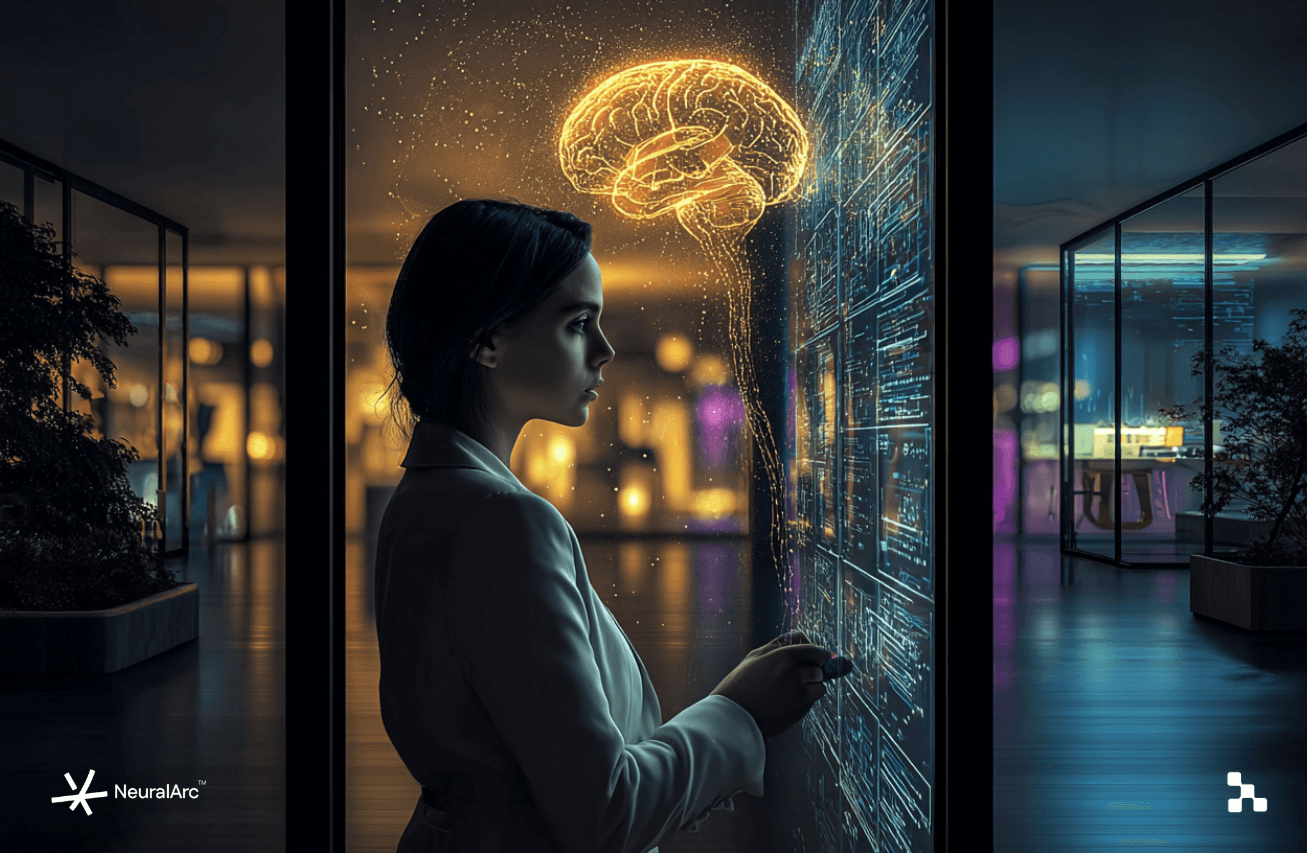
Neuro-Inspired AI: What Businesses Can Learn from the Human Brain
The quest for artificial intelligence has long been intertwined with the desire to understand and replicate the human brain. For decades, researchers have looked to neuroscience for inspiration, seeking to unlock the secrets of human intelligence and apply them to the development of more advanced AI systems. Today, this pursuit is bearing fruit, with neuro-inspired AI techniques revolutionizing fields from image recognition and natural language processing to robotics and decision-making.
Unlocking the Power of Neural Networks
At the heart of neuro-inspired AI lies the concept of the artificial neural network (ANN). ANNs are computational models inspired by the structure and function of biological neural networks in the human brain. They consist of interconnected nodes (neurons) that process and transmit information. Like their biological counterparts, ANNs learn by adjusting the strengths of these connections based on the data they are exposed to. This ability to learn from data without explicit programming is what makes neural networks so powerful.
One of the most successful types of ANNs is the deep neural network (DNN), which consists of multiple layers of interconnected neurons. DNNs have achieved remarkable results in a wide range of tasks, including image recognition, natural language processing, and speech recognition. For example, DNNs are used in self-driving cars to identify objects in their environment, in virtual assistants like Siri and Alexa to understand human speech, and in fraud detection systems to identify suspicious transactions. Businesses can leverage DNNs to automate tasks, improve decision-making, and personalize customer experiences.
Key applications of neural networks in business include:
- Predictive maintenance in manufacturing
- Fraud detection in finance
- Personalized marketing in retail
- Supply chain optimization in logistics
Adaptive Memory and Reinforcement Learning: Learning Like Humans
Beyond neural networks, neuro-inspired AI also draws inspiration from other aspects of human cognition, such as memory and learning. Adaptive memory systems, for example, are designed to mimic the way the human brain stores and retrieves information. These systems can dynamically adjust their memory capacity and prioritize the storage of important information, making them more efficient than traditional memory systems. This is particularly useful in applications where data is constantly changing, such as financial markets or social media.
Another important concept is reinforcement learning (RL), which is inspired by the way humans learn through trial and error. In RL, an agent learns to make decisions in an environment by receiving rewards or penalties for its actions. Over time, the agent learns to choose actions that maximize its cumulative reward. RL has been successfully applied to a variety of tasks, including game playing, robotics, and resource management. Businesses can use RL to optimize complex processes, automate decision-making, and develop new products and services.
Here are some examples of how businesses are using reinforcement learning:
- Optimizing pricing strategies
- Personalizing recommendations
- Controlling robots in warehouses
The Future of Neuro-Inspired AI in Business
Neuro-inspired AI is still a relatively young field, but it has the potential to transform the way businesses operate. As AI technology continues to evolve, we can expect to see even more sophisticated neuro-inspired systems that are capable of solving complex problems and making intelligent decisions. Businesses that embrace neuro-inspired AI will be well-positioned to gain a competitive edge in the future.
One exciting area of development is neuromorphic computing, which aims to build hardware that mimics the structure and function of the human brain. Neuromorphic chips are designed to be more energy-efficient and faster than traditional computers, making them ideal for running complex AI algorithms. As neuromorphic technology matures, it could enable the development of AI systems that are even more powerful and adaptable than today's systems.
The intersection of neuroscience and artificial intelligence offers a powerful path forward. By learning from the brain, we can create AI systems that are not only intelligent but also efficient, adaptable, and robust. The potential for businesses to leverage these technologies is immense, promising a future where AI helps us solve some of the world's most challenging problems.